Go to News

Innovation Camp with IFSB
Jonk Entrepreneuren Luxembourg © Pierre Levy / www.levygraphie.lu

An inspiring Innovation Camp to rethink the future of the construction sector

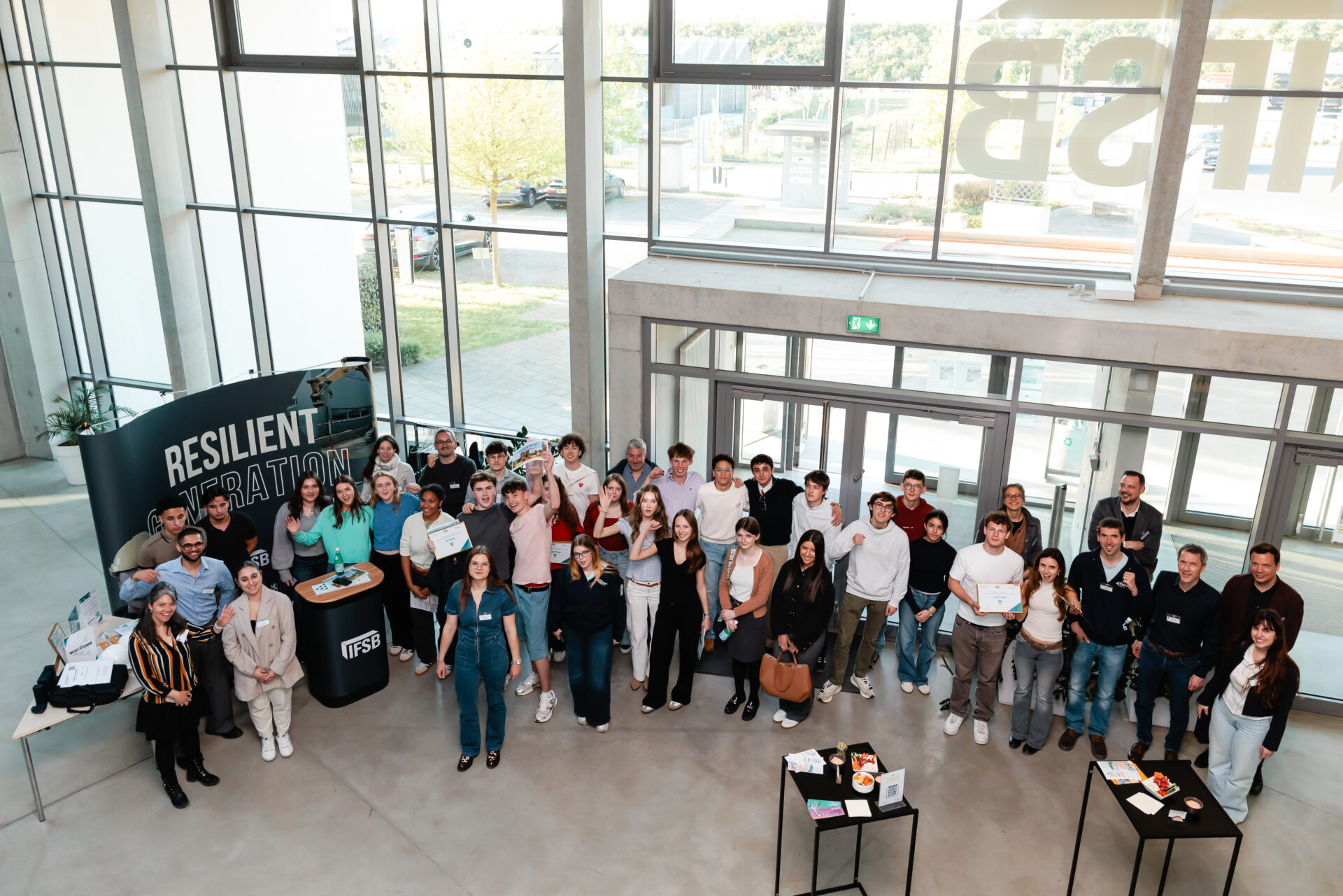
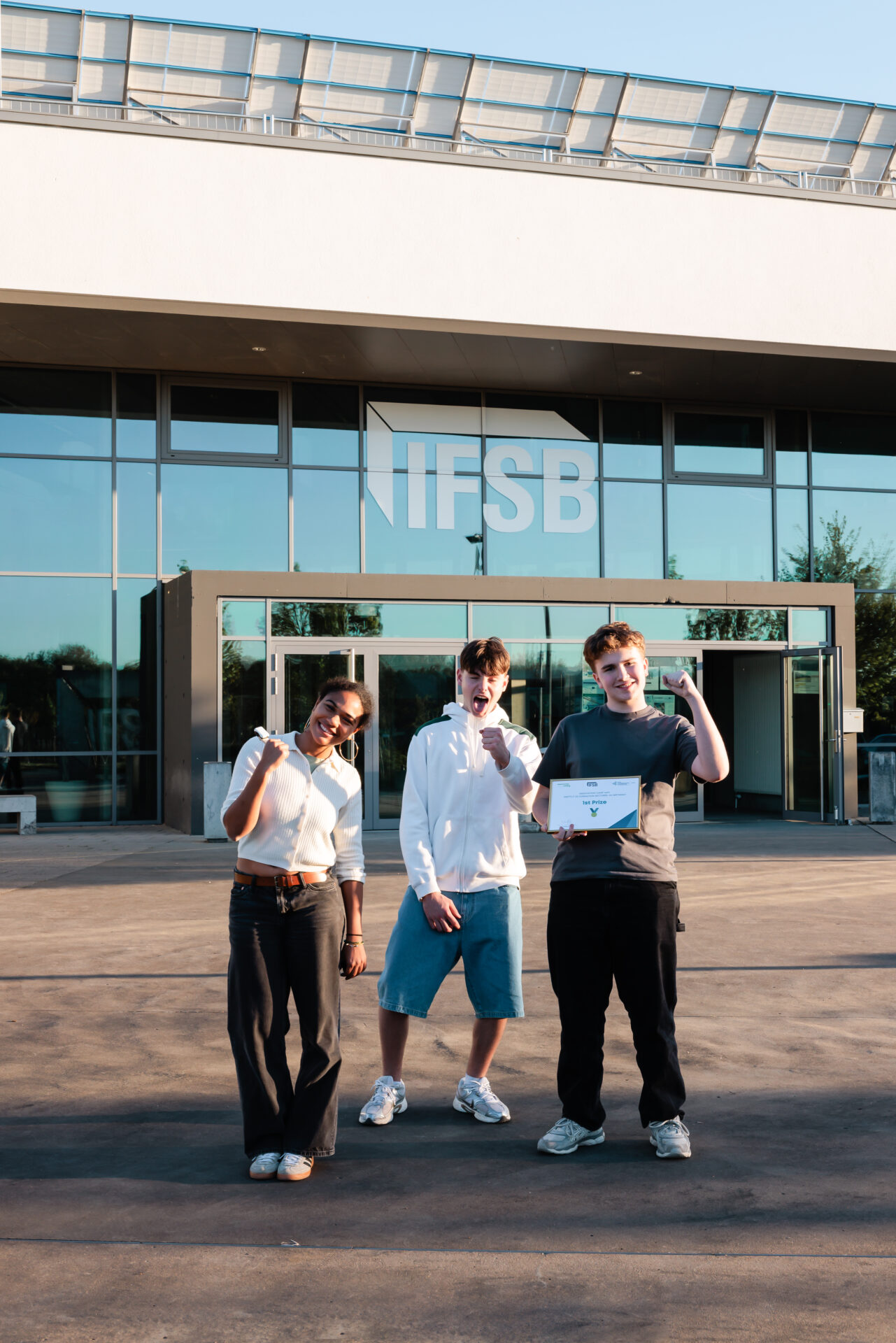
On 23 April 2026, Jonk Entrepreneuren Luxembourg, in collaboration with the Institut de Formation Sectoriel du Bâtiment (IFSB), organised an Innovation Camp at the institute’s premises in Bettembourg. The event brought together 25 young people aged between 16 and 19, from various secondary schools across Luxembourg, to tackle a topical challenge: imagining the future of our neighbourhoods.


The challenge set by the IFSB invited participants to look to the future by asking the following question: ‘Imagine 2050: What will our neighbourhoods look like, and how will we live there? ”

“A challenge designed for today’s young people, who will be the residents of our neighbourhoods in 25 years’ time. An invitation to look ahead to their future and imagine the living spaces of tomorrow,” Caroline Gontier – IFSB.


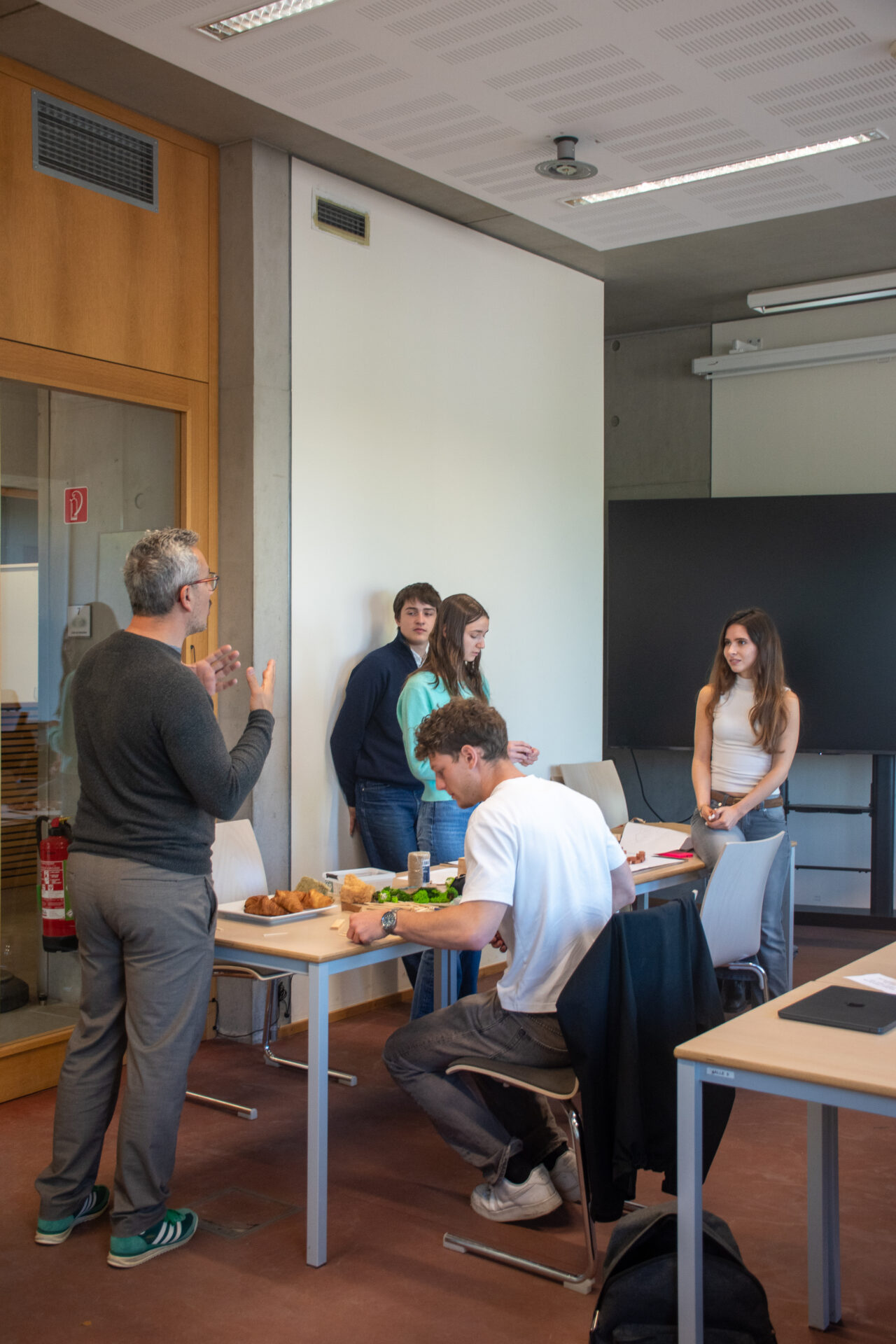
Divided into six teams, the pupils were supported throughout the day by six volunteers – Xavier Duboisdendien, Marcel Deravet, Marie-Alix Dalle, Carine Oberweis, Alexandra Kelleter and Fanny Remy – who coached them to develop practical, innovative solutions tailored to the realities of the construction sector.


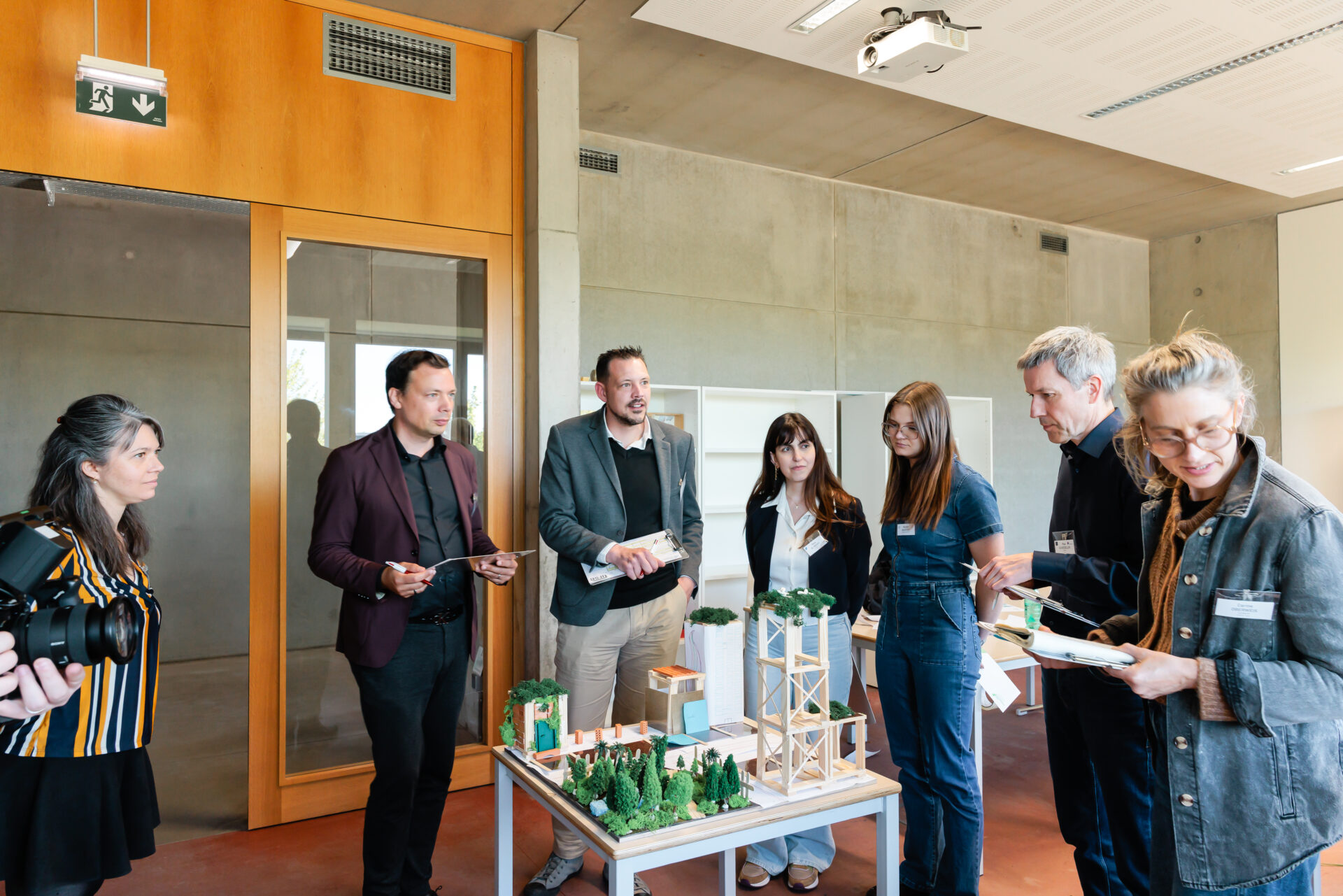
At the end of this intense day of reflection and creativity, the teams presented their projects to a five-member jury:

  • Paul Schossler, Directeur Construction durable au ministère de l’Économie et vice-président du Conseil National pour la Construction Durable
  • Carine Oberweis, Architecte, Experte en design durable, Designer de maison passives
  • Charlie Boon-Bellinaso, Ingénieur civil architecte, Chargé mission stratégie et normalisation BIM Luxembourg CRTI-B, Gérant Activhome sàrl
  • Luc Meyer, Directeur Neobuild GIE
  • Perla El Boueiz, Senior Advisor Sustainable Construction, Luxinnovation GIE
About the Innovation Camp

An Innovation Camp is an intensive one-day workshop organised in collaboration with a partner company. The pupils, divided into teams, work on a real-world challenge and develop solutions with the support of professionals.

At the end of the day, they present their ideas to a panel of judges. This experience enables them to develop key skills such as creativity, teamwork, critical thinking and pitching, whilst gaining an insight into the world of work.

Des idées innovantes récompensées

1st place: Team « Auto Verse »

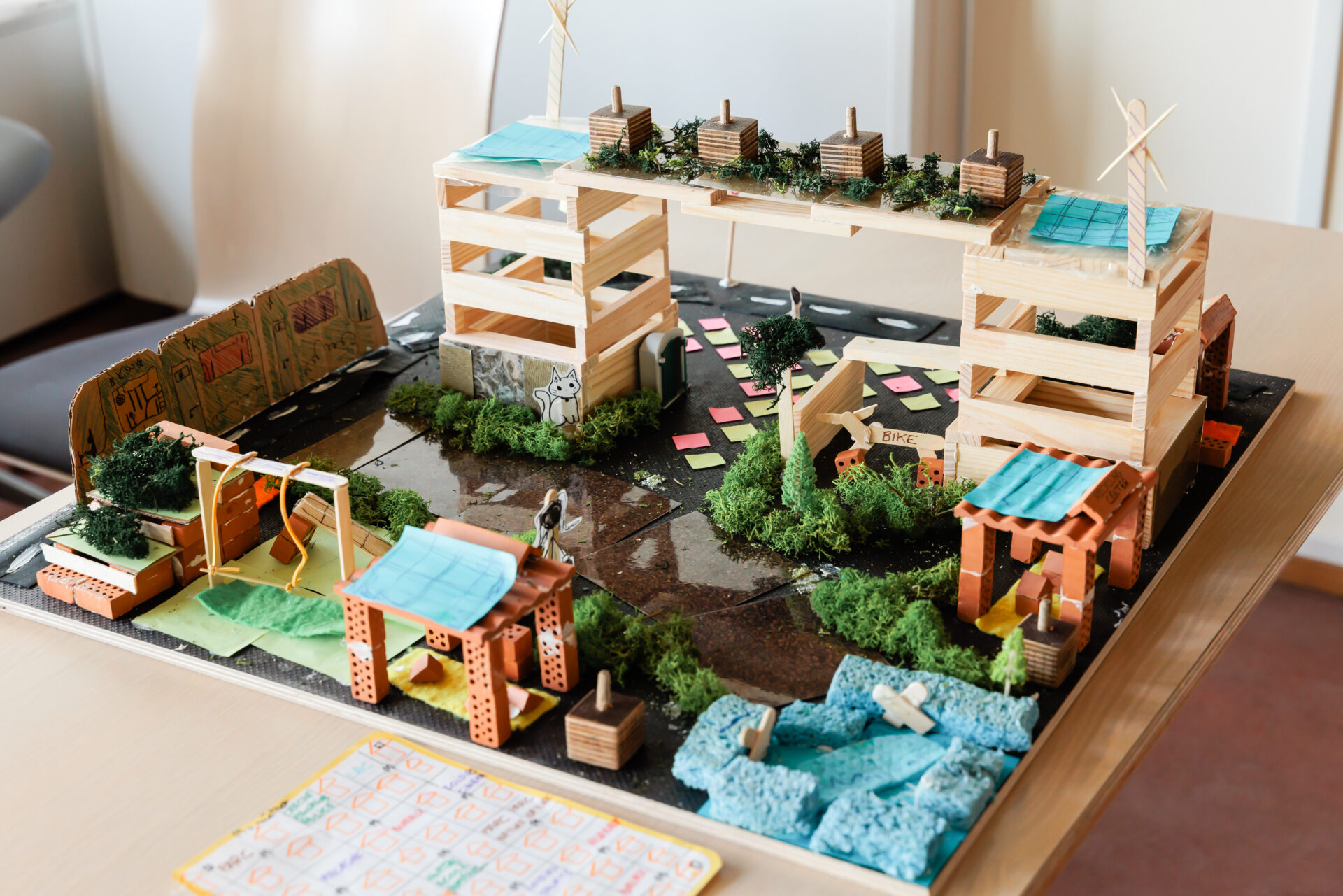
The team’s solution aims to address a number of urban challenges, such as dependence on external resources, water scarcity, the need for energy self-sufficiency and weak social ties amongst residents.

The students propose creating an energy-self-sufficient neighbourhood, relying on local and renewable resources, whilst strengthening the sense of community. At its centre, a smart park would serve as the heart of the neighbourhood, around which essential services (market, bike station, etc.) would be grouped. A natural pond filtered by plants would provide drinking water, whilst fountains would generate energy through their potential. The team consists of four students: Candice Boutoleau, Gaëtane Egerton, Sinan Bilsel and Valerio Gulli.


2nd place: Team « EcoVisionaries »

The team is proposing a neighbourhood of the future called ‘Resilient Hood’, which is entirely sustainable, modern and self-sufficient. This neighbourhood is based on smart buildings, powered by renewable energy and constructed using eco-friendly materials, whilst recycling water and resources in a closed-loop system.

The project also emphasises quality of life: sustainable transport, local amenities, abundant green spaces and the strengthening of social ties between residents. Finally, it aims for total energy and food self-sufficiency, with a target of zero waste and zero use of fossil fuels.

The team members are Amélie Mendeleev, Lucia Carreiras, Timothée Gervis and Yoann Janeiro Campanha.


3rd place: Team « The Green Loop »

The team is proposing a neighbourhood designed to minimise carbon emissions through an integrated and sustainable way of life. Car-free, it prioritises public transport and walking, with all essential services accessible nearby. The central park forms the social and ecological heart of the neighbourhood, whilst a tram line running through it encourages its use.

The construction utilises sustainable and locally sourced materials (wood, natural insulation, low-emission steel) to minimise the long-term environmental impact. Finally, a self-sufficient commercial hub combines local shops with on-site food production, enabling a circular economy with zero transport required for essential goods.

The solution was developed by Adriana Florez, Elisa Scotti, Octave Sohn, Romain Donnay de Casteau and Valentine Lyonnet.

Jonk Entrepreneuren Luxembourg © Pierre Levy / www.levygraphie.lu

This Innovation Camp perfectly illustrates the mission of Jonk Entrepreneuren Luxembourg: to connect young people with the world of work and to strengthen their entrepreneurial skills, creativity and critical thinking.

Thanks to committed partners such as the IFSB, young people have the opportunity to work on real-world challenges and play an active role in devising solutions for the world of tomorrow.

Jonk Entrepreneuren Luxembourg would like to extend its warmest thanks to the IFSB for its collaboration, inspiration and support throughout the day.